


Written by Penna a Spillo
✈️ Categoria: Weekend in Europe
🇵🇹 What to see in Porto in three days: the ultimate 3-day itinerary
Porto felt different from Lisbon: smaller, less chaotic, with a slower and more relaxed rhythm.
Walking up and down its steep streets, you quickly realise how closely the city is connected to the river, with the Ribeira area standing out as the most lively and authentic part of it.
In three days, you can really get a sense of Porto’s character, among churches covered in azulejos, historic wine cellars and views that stretch all the way to the ocean.
There is a lot to see, but three days are enough to truly get into the spirit of the city, with a bit of planning.
Here are my suggestions for visiting Porto over a long weekend.

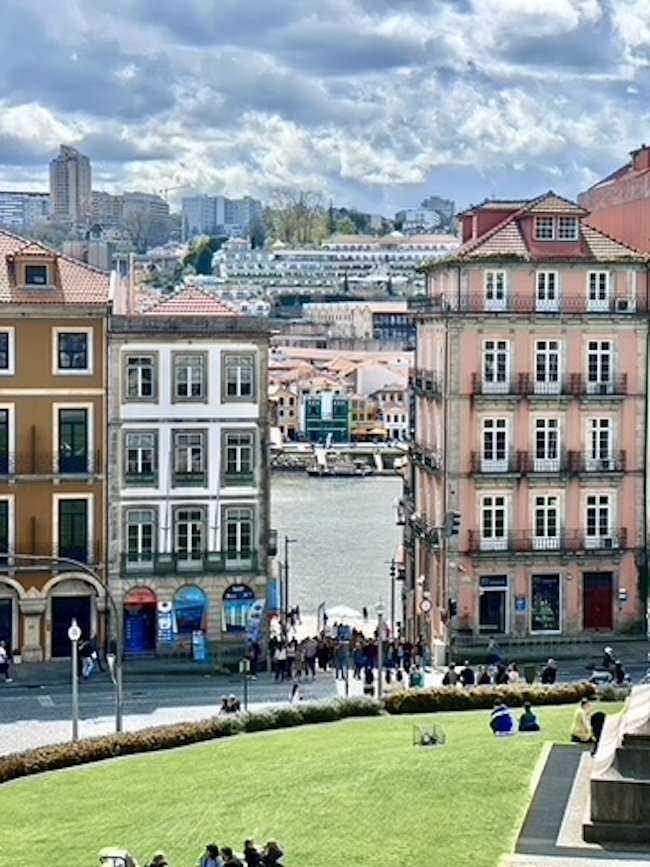

🗓️ Day 1: Ribeira, Mercado Ferreira Borges and Vila Nova de Gaia
- Morning: Ribeira district and the Douro River – a walk through characteristic streets and river views.
- Afternoon: Mercado Ferreira Borges – a break among food stalls and restaurants overlooking the Douro.
- Evening: Vila Nova de Gaia – wine cellars, tastings and panoramic views over Porto’s historic centre.
🌊 Ribeira district and the Douro River
Ribeira is the heart of Porto, and there’s no better way to get to know it than by walking along the river.
The tightly packed houses, with façades worn by time, tell the story of everyday life better than any guidebook ever could.
Here, you mix with café tables overlooking the Douro, between those grabbing a quick coffee and others simply watching the boats pass under the Dom Luís I Bridge.
It’s a simple, straightforward neighbourhood, where the atmosphere doesn’t feel staged for tourists, but shaped by the people who actually live there.
Ribeira is the district that best reveals the soul of Porto: it’s not tidy or elegant, but it’s alive. Laundry hanging from windows, children playing in the squares, and the smell of grilled fish coming from small local restaurants.
The river is always there in the background, and all it takes is a few minutes of stillness to notice how slow and grounded life feels here.
It’s a place that doesn’t try to impress, and maybe that’s exactly why it stays with you.
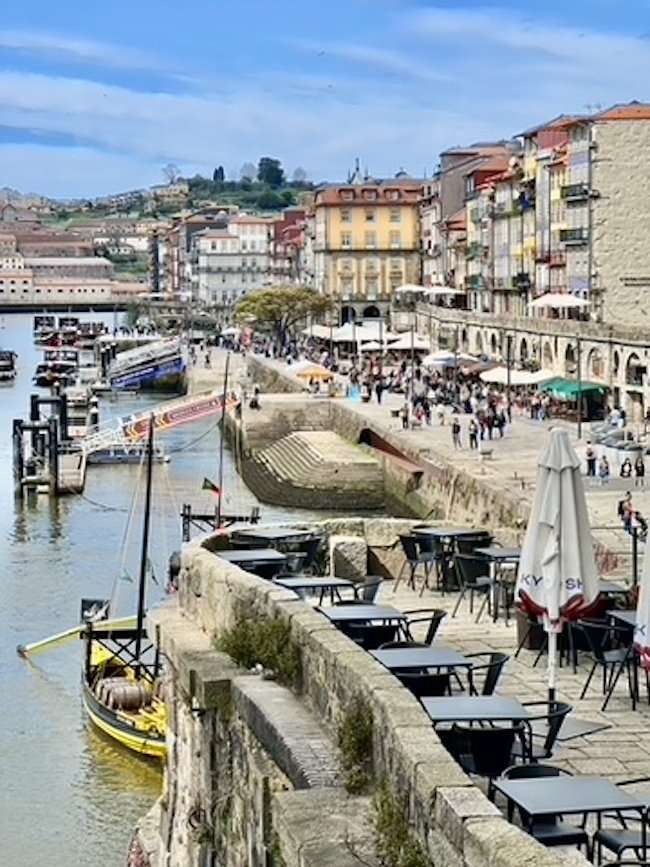


🍷 Mercado Ferreira Borges
Right by the river, in the Ribeira area, you’ll find Mercado Ferreira Borges, which is well worth a stop.
It’s a covered structure of iron and glass that today hosts breweries, cafés and informal restaurants where you can try local food without too much ceremony.
It’s not particularly large, but its location makes it special: while you eat, the Douro is always in front of you, with the constant movement of the neighbourhood all around.


🥂 Vila Nova de Gaia & Port wine cellars
On the opposite side of the Douro, in Vila Nova de Gaia, you’ll find the wine cellars where Port wine is produced.
You can step inside for a short visit, see the barrels, hear a few stories, and, of course, taste the wine.
It’s not a complicated experience, nor one reserved only for wine lovers: it’s simply a way to understand how deeply this wine is tied to the city.
And once the tasting is over, the view of Porto from the other side of the river is reason enough to take the walk.
Vila Nova de Gaia is not just about wine cellars.
Walking along the river, the atmosphere feels calmer, with beautiful views of Porto’s historic centre and small bars where you can stop for a drink before crossing the bridge again.


This article is part of the way I tell stories about cities.
If you’d like to receive more of them once a month, you can subscribe to the free Penna a Spillo Newsletter, with events in London and beyond.
🗓️ Day 2: Historic centre, São Bento Station and Mercado do Bolhão
- Morning: Porto historic centre – a walk through the main streets, with a stop at Café Majestic and a visit to Igreja de Santo Ildefonso, famous for its azulejo façade.
- Afternoon: São Bento Station – time to admire the azulejos that tell the history of Portugal.
- Evening: Mercado do Bolhão – a stroll among local produce stalls and a lively atmosphere, with the option to eat at one of the small eateries inside the market.
🏛️ The heart of Porto: Rua das Flores & Café Majestic
The centre of Porto is a mix of history and everyday life.
Walking along Rua das Flores, one of the city’s oldest and most charming streets, you can feel how past and present blend naturally.
Along this street, Café Majestic stands out with its old-world elegance.
Opened in 1921, it’s a historic café where time seems to have stopped, with Belle Époque interiors and the perfect atmosphere to sit down and enjoy a coffee at a slow pace.
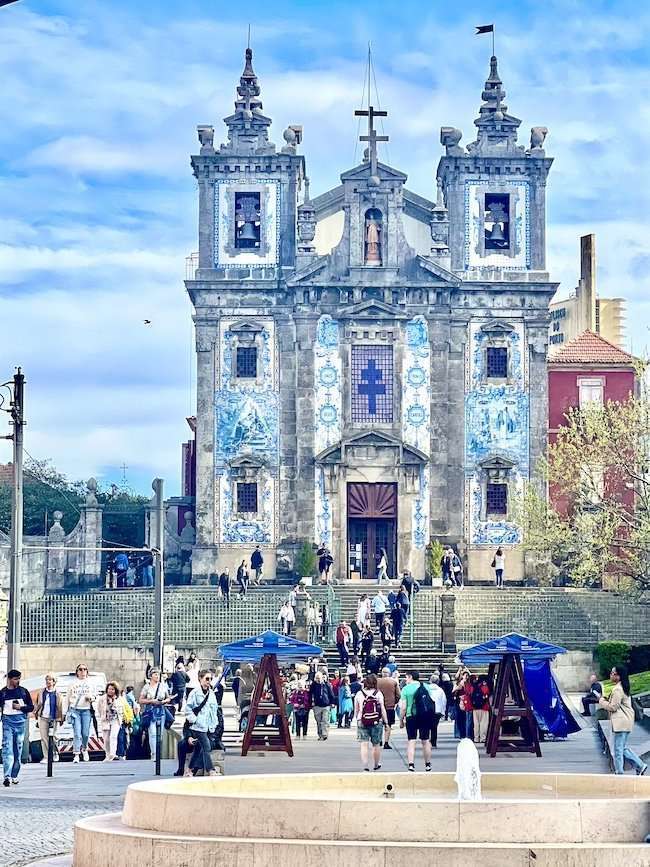
🎨 Igreja de Santo Ildefonso: a masterpiece of azulejos
Continuing on, you reach Igreja de Santo Ildefonso, an 18th-century church near Praça da Batalha that offers a truly striking first impression.
Its façade is decorated with over 11,000 azulejo tiles, created in 1932 by artist Jorge Colaço, depicting scenes from the life of Saint Ildefonso and the Virgin Mary, a remarkable example of Portuguese tile art.


🚉 São Bento Station: Portugal’s history in tiles
São Bento Station is more than just a place to arrive or depart; it’s a small museum.
As soon as you step inside, the walls covered in blue and white azulejos tell the story of Portugal through battles, celebrations and everyday scenes.
The atmosphere is always lively, with passengers and visitors passing through, but the artistic details are beautiful, and it’s impossible not to stop for a moment, without rushing, to admire the care and craftsmanship behind each painted scene.


🧺 Mercado do Bolhão: the authentic local life
Mercado do Bolhão is the beating heart of traditional commerce in Porto.
Among stalls selling fruit, vegetables, fish and meat, you can still feel the authentic atmosphere of a local market, with vendors who have known their customers for years and conversations flowing naturally through the corridors.
This isn’t a market built for tourists; it’s everyday life, with smells and colours that tell the story of the city better than any guidebook.
🗓️ Day 3: Clérigos district and Livraria Lello
- Morning: Clérigos district – a walk through steep streets and city views, reaching the area by tram along Porto’s characteristic routes.
- Afternoon: Livraria Lello – a visit to the historic bookshop, famous for its interior architecture and its iconic staircase.
- Evening: A walk through the surrounding streets, stopping at small cafés or viewpoints to enjoy the sunset over the city.
🏙️ Clérigos district: steep streets, trams and street art
The Clérigos district is a lively, hilly area, where narrow streets and colourful houses immediately pull you into Porto’s atmosphere.
The Torre dos Clérigos, 75 metres tall, is the main landmark and offers panoramic views over the city.
Nearby, Rua de Cedofeita is a main street filled with shops, cafés and art galleries, with a young and dynamic feel.
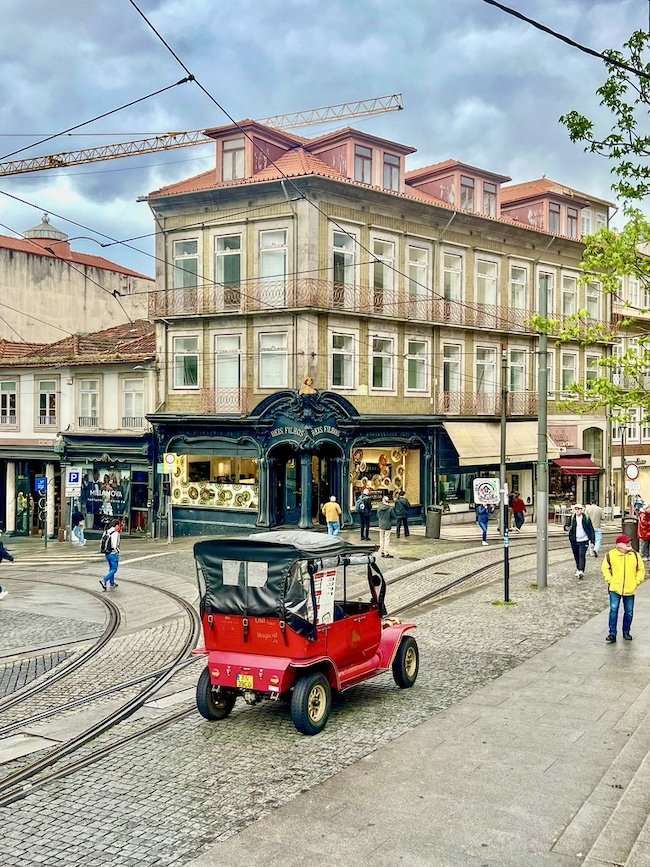
Clérigos is also an open-air museum for anyone who loves urban details. Between climbs and descents, the historic tram passes slowly, adding rhythm to the neighbourhood.
Murals and street art blend with traditional façades, while hidden courtyards and small streets reveal cosy cafés where you can stop for a while, watch people go by and try a local pastry or a Portuguese coffee.
It’s a district to explore without haste, to catch the details that those in a rush often miss.


📚 Livraria Lello: the legendary Harry Potter bookshop
Livraria Lello, Porto’s historic bookshop, is located in the heart of the Clérigos district and is known for its interior architecture: spiral staircases, dark wooden shelves and decorated ceilings create a distinctive atmosphere.
Despite the number of visitors, the mood inside is calm, and browsing through the books is still enjoyable. Light filters through large windows, highlighting the carved details and decorative motifs, making the space interesting even just to observe.
Livraria Lello is also famous for its connection to Harry Potter.
It’s said that J.K. Rowling found inspiration here during her years in Porto.
Among the carved details and soft light, it’s easy to see why this place captured the imagination of book lovers, without the need for special effects or elaborate staging.
Because it’s often very busy, it’s best to book your ticket in advance to avoid long queues.


💡 Practical tips for visiting Porto
Before wrapping up the itinerary, here are a few practical tips to make your trip to Porto easier and more enjoyable:
- Transport: the city is well connected by metro, which is also convenient for reaching the airport. Walking is still the best way to explore the centre.
- Local food: try Port wine directly in the cellars of Vila Nova de Gaia.
- Clothing: Porto has many steep streets with slippery pavements — comfortable shoes are essential.
- Tipping: not mandatory, but appreciated, as in Lisbon (5–10% in restaurants).
- Payments: cards are accepted almost everywhere, but small cafés may prefer cash.
- Safety: generally a safe city, but stay aware of pickpockets in crowded areas.
- Weather: conditions can change quickly — a compact umbrella or a light jacket is always a good idea.
🗺️ Interactive map of Porto
Here you’ll find the interactive map with the routes described above and all the stops mentioned.
🧭 Discover more travel guides
If you enjoy exploring cities at a slower pace, guided by atmosphere and details, on the blog, you’ll find many itineraries to discover London like a local, through my SoulMap™, starting with authentic neighbourhoods such as Notting Hill.
You might also like these three-day itineraries:
- Lisbon in 3 Days: Top Attractions and Must-See Sights
- To stay updated on new articles, events, exhibitions and unusual places in London and beyond, you can subscribe to the monthly Penna a Spillo Newsletter here → Subscribe to the newsletter.
- If you enjoy following trips in real time and taking a look behind the scenes, I also share travel photo reportages on Instagram: you’ll find me as @pennaaspillo → Follow me on Instagram.


